This inspection is often not well understood and therefore ignored. I would like to elaborate on this and hopefully shed some light on why it is important for the smooth running of your engine — and consequently for its reliability and longevity.
Does Your Engine Have a Slipper Clutch?
This inspection is required on carburettor 912 and 914 engines that are equipped with a slipper clutch. The first question is usually: how do I know if my engine has a slipper clutch?
You can check the engine configuration on FlyRotax.com using the engine configuration search. The results will indicate whether your engine was fitted with a slipper clutch at production. Note, however, that one may have been installed at a later stage without any logbook entries being made.
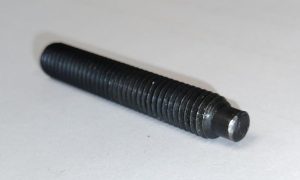
If you are unsure, refer to your nearest Repair Centre or an iRMT-rated AP to check on your behalf. If you wish to do it yourself, please note that iRMT training is recommended; however, the check is relatively straightforward. You will need to lock the crankshaft — instructions for this are contained in the latest version of the MML (Line Maintenance Manual), which can be downloaded from FlyRotax.com. You will also need the lock screw, part number 240880, available from shop.cometaviationsupplies.co.za or by calling 011 825 0048.
Once the crankshaft is correctly locked, you will be able to turn the propeller by approximately 30 degrees in either direction — this confirms that the engine is equipped with a slipper clutch. If the propeller turns considerably less than 30 degrees, it does NOT have a slipper clutch, and the Friction Torque inspection is not applicable.
Measuring the Friction Torque
Once you have confirmed that your engine has a slipper clutch, proceed as follows:
- Lock the crankshaft.
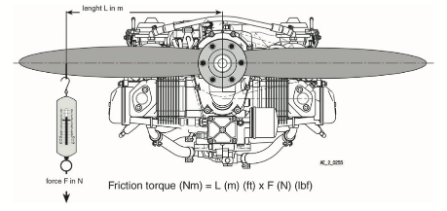
- Measure 500 mm from the centre of the prop hub along any blade and mark the position with masking tape.
- Turn the propeller in the opposite direction of rotation (clockwise) until it stops.
- Attach a suitable scale (0–20 kg, e.g. a fishing scale) to the blade using a strap or rope.
- Pull down on the scale at 90 degrees to the prop blade in the normal direction of rotation (counter-clockwise).
- Observe the force in kilograms required to initiate movement.
- Repeat several times to obtain an average reading.


Torque Calculation
To convert the measured force to torque (Nm), use the following formula and example:
Friction Torque (Nm) = Force (N) × Length (m)
Example: Assuming a measured force of 11 kg:
- 11 kg × 10 = 110 N
- 110 N × 0.5 m = 55 Nm
This calculation is also detailed in the relevant MML.
Once the measurement is complete, remove the crankshaft locking screw and re-install the Allen screw with a new sealing ring. Do not forget to wire lock.
Inspection Intervals and Minimum Values
The Maintenance Schedule requires this inspection to be performed at the first 25 hours and at every 100 hours thereafter. The minimum specified friction torque is 30 Nm; however, from experience it is recommended to maintain a value of 40 Nm or above.
If the measured value is at or below 40 Nm, the aircraft should be referred to an Authorised Repair Centre with a Heavy Maintenance rating for inspection and repair of the gearbox.

Symptoms of Low Friction Torque
A very low friction torque will manifest as a ‘clattering’ propeller during engine shutdown. Note that it is perfectly normal for the propeller to stop ‘dead’ on shutdown when the engine is equipped with a slipper clutch — this is by design.
Low friction torque accelerates wear on gearbox components and can result in vibrations at certain RPM ranges or during throttle reduction. These vibrations may cause damage to the engine frame, the airframe, and other critical components.
A low friction torque also places increased stress on the sprag clutch, which engages the starter motor to turn the engine. Symptoms may include violent backlashing from the propeller during starting, or persistent difficulty starting.
Summary
This inspection is simple enough to carry out during routine maintenance. Please ensure that your Repair Centre or independent AP is performing and recording this check as part of the MPI or service. It is also essential that the maintenance schedule as published in the MML is followed to ensure continued airworthiness, safety, and the reliable operation of your ROTAX engine.